auto blogging earning

auto blogging earning

Auto blogging involves using automated tools to generate and publish content on a blog without manual input. Earning through auto blogging is possible, but success depends on strategic implementation

auto blogging earning

1. Find Your Niche: Identify a specific and profitable niche for your auto blog. This could be anything from technology and lifestyle to finance or health. A niche allows you to target a specific audience and cater to their needs

Do you have ever heard of Event Blogging? If no then let me tell you, what exactly does it means.

“A blog which is made to target a single day or week or month for receiving the huge amount of traffic is called event niche blog. Example: Happy New Year (Target: one day or week) Indian Premier League (Target: Almost 50 Days) In the short span of time, you can make huge income.” [Know More]


2. Keyword Research
auto blogging earning

Keyword Research: Conduct thorough keyword research to understand what your target audience is searching for. Use tools like Google Keyword Planner to find relevant keywords with high search volumes and low competition

#KeywordResearchExplained
Keyword research is a crucial aspect of Search Engine Optimization (SEO) and digital marketing. It involves identifying and analyzing the specific terms and phrases users enter into search engines when looking for information, products, or services. The goal is to understand user intent and optimize online content to align with these queries, enhancing a website's visibility on search engine results pages.

To conduct keyword research, digital marketers use various tools such as Google Keyword Planner, SEMrush, or Ahrefs. These tools provide insights into the search volume, competition, and relevance of specific keywords. Marketers aim to target keywords that strike a balance between high search volume and manageable competition.

Effective keyword research involves:

Relevance: Choosing keywords closely related to the content or products offered on a website.
Search Volume: Identifying keywords with an adequate number of searches to ensure visibility.
Competition Analysis: Evaluating the competitiveness of chosen keywords to optimize for achievable rankings.
Implementing well-researched keywords in website content, meta tags, and other elements helps search engines understand and rank the site appropriately. This strategic approach to keyword research enhances organic traffic, improves SEO performance, and contributes to the overall success of digital marketing efforts.

3. Create Quality Content 
auto blogging earning

Create Quality Content: Develop informative and engaging content that adds value to your readers. High-quality content not only attracts more visitors but also improves your blog's credibility and search engine ranking

4. Optimize for SEO

auto blogging earning

Optimize for SEO: Implement on-page and off-page SEO strategies to improve your blog's visibility on search engines. This includes optimizing meta tags, using descriptive URLs, and building quality backlinks.

5. Monetize Through Affiliate Marketing

auto blogging earning

Monetize Through Affiliate Marketing: Choose relevant affiliate products and integrate them into your auto blog. Earn commissions for every sale generated through your affiliate links.

Read More Comments

Only 1 MCU Release In 2024 Isn’t A Spin-Off


The Marvel Cinematic Universe Phase 5 will continue in 2024, but only one of its forthcoming properties is not a spin-off. Amidst a variety of shakeups and delays, 2024’s slate of MCU Phase 5 properties will include several TV shows and one highly anticipated movie, continuing the MCU’s Multiverse Saga as it builds towards its finale, which will likely be altered significantly following the firing of Jonathan Majors as Kang the Conqueror. 2024’s MCU properties will, fittingly, take place across various realities, with most tying into the main MCU timeline.

2024 was initially set to include Captain America: Brave New World – a film that continues the saga of Sam Wilson as the new Captain America following the Avengers: Endgame ending and The Falcon and the Winter Solider – which would itself lead into Marvel’s Thunderbolts. With both films delayed, the only MCU movie releasing in 2024 is Deadpool 3, a film that will bridge the MCU to the Fox X-Men universe and potentially many other familiar realities. As for the rest of 2024’s MCU releases, they will be spin off TV shows based on previous MCU properties.

Deadpool 3 Is The Only MCU Release Of 2024 That Isn't A Spin-Off


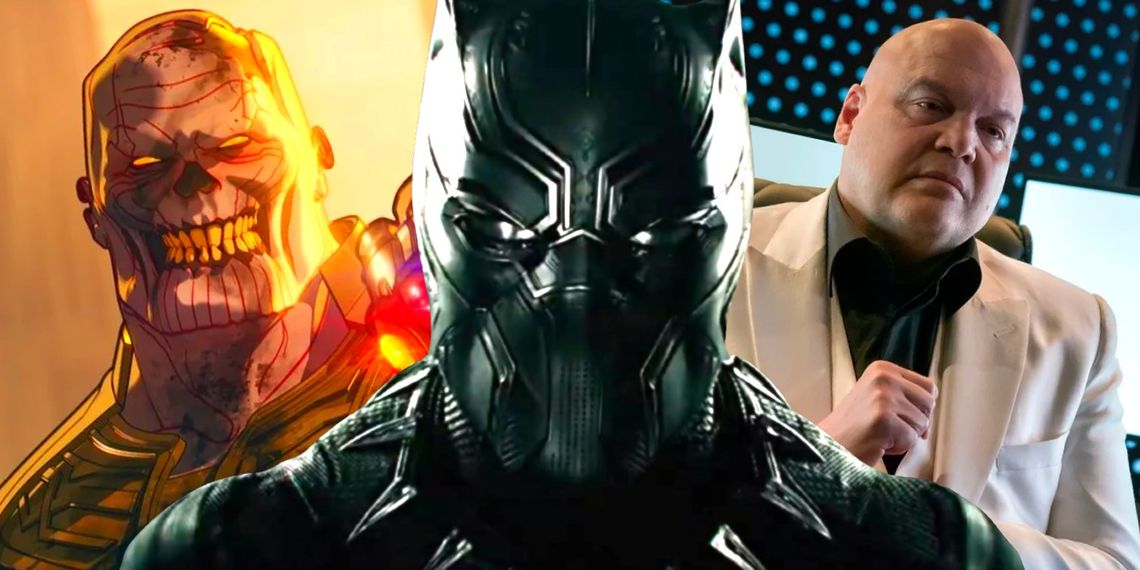
The MCU will begin its 2024 slate with Echo, a series centered on Maya Lopez, who was introduced in 2021’s Hawkeye. Agatha: Darkhold Diaries will see the return of Agatha Harness, the antagonist and breakout character of WandaVision. Your Friendly Neighborhood Spider-Man – fascinatingly – is an animated series based on Spider-Man: Homecoming, featuring an alternate version of the MCU in which Peter Parker is mentored by Norman Osborn instead of Tony Stark. The upcoming Eyes Of Wakanda animated series will further explore the history of Wakanda established in Black Panther and Black Panther: Wakanda Forever, and Marvel Zombies will be based on an episode of Marvel’s What If…? season 1.

Deadpool 3, however, will not be a spinoff of a previous MCU property. The film will likely have massive ramifications for the main MCU timeline, bringing not only Deadpool into the MCU but also potentially many other X-Men characters. The X-Men’s introduction to the MCU is inevitable, but with the Fox X-Men universe being bridged to the MCU, it is now possible that the MCU’s mutants (other than Wade Wilson) may come from multiple realities.

X-Men '97 Is A Sequel (But It's Not In The MCU)


One highly anticipated Marvel property due to be released in 2024 is X-Men ’97, which, notably, is not a spinoff but rather a sequel to the beloved X-Men Animated Series. X-Men ’97, despite being produced by Marvel Studios Animation, is not set in the MCU, though considering the multiversal premise of Marvel’s current properties, it is safe to assume that its reality may be referenced in future MCU properties. As it stands, the Marvel Cinematic Universe’s Doctor Strange in the Multiverse of Madness and Ms. Marvel each reference the original X-Men Animated Series.


Read More Comments

New OTT Releases January 2024: Animal, Killer Soup & And More Movies, Web Series To Watch


OTT Releases January 2024: From Animal to Killer Soup, here’s a list of the most anticipated OTT releases of the first month of 2024.

As the new year begins, the world of Indian OTT platforms continues to dazzle audiences with a diverse array of content. The month of January 2024 promises to be enthralling, with streaming services delivering a mix of captivating stories, interesting dramas, and pulse-pounding thrillers. The Indian entertainment industry is poised to display its creative prowess on digital platforms, showcasing well-known actors and up-and-coming talent. Here’s the list of the most anticipated Indian OTT releases January 2024. To know, keep on reading!


Animal

Releasing on: 26 January 2024

Streaming on: Netflix

The film shows the tumultuous relationship between a father and son. Ranbir is seen in a never-seen-before avatar. Animal revolves around the complex relationship between a business magnate Balbir Singh (Anil Kapoor) and his son Ranvijay Singh (Ranbir Kapoor).

After tragedy befalls Balbir, Ranvijay sets out to exact vengeance against his rival Abrar Haque (Bobby Deol) and pledges to never leave his family, leading to a gruesome gang war. Helmed by Sandeep Reddy Vanga, the movie also stars Anil Kapoor, Rashmika Mandanna, Bobby Deol, and Tripti Dimri.


Sam Bahadur

Releasing on: 26 January 2024

Streaming on: ZEE5

Despite strong competition from Ranbir Kapoor’s Animal, Vicky Kaushal’s Sam Bahadur managed to make its mark at the box office. The historical drama will now be available on the OTT platform. The plot revolves around Sam Manekshaw, who became the first Indian Army officer to be promoted to the rank of Field Marshal.

The film, which takes place over four decades, examines Manekshaw’s remarkable career and his crucial role in five conflicts, including his command of the 1971 Indo-Pakistani War, which resulted in the establishment of Bangladesh.


1+ Prabhas Next Movies: ‘सालार’ के बाद इन फिल्मो से बॉक्स पर धमाल मचाने आ रहे है

Dunki Box Office Collection Day 5: ‘डंकी’ ने बॉक्स ऑफिस पर लपेटे इतने करोड़ !

Marvel Just Undermined Iron Man's Endgame Death Twice In 4 Days


Do Patti

Releasing on: January 2024

Streaming on: Netflix

Directed by Shashanka Chaturvedi, the movie is billed as a mystery thriller set in the hills of northern India. It stars Kajol and Kriti Sanon in lead roles. The film is slated to transport viewers to the captivating hills of North India, which provide a backdrop for the mystery and intrigue to unfold, and take them on an exhilarating, suspenseful ride like never before.


Killer Soup

Releasing on: 11 January 2024

Streaming on: Netflix

In this Abhishek Chaubey’s directing debut, Konkona Sen Sharma plays the unconventional chef Swathi Shetty, joined by the versatile Manoj Bajpayee as her husband Prabhakar. Together, they pursue culinary success. The storyline becomes more intriguing as Swathi comes up with a cunning plan to replace Prabhakar with her lover, Umesh. The film promises entertaining chaos with a group of amateur villains and a bumbling local inspector.


Indian Police Force

Releasing on: 19 January 2024


Streaming on: Prime Video

Indian Police Force is a cop drama directed by Rohit Shetty that promises lavish entertainment and stunning visuals for the OTT platform. The first season of the show, which will consist of seven episodes, is intended to be a patriotic homage to the nation’s police force for their selfless service.


Karmma Calling

Releasing on: 26 January 2024

Streaming on: Disney+ Hotstar

“Karmma Calling,” helmed by Ruchi Narain, is the Hindi adaptation of the American drama series “Revenge.” Tandon will play Indrani Kothari, the ruling queen of the Alibaug society, in the film “Karmma Calling,” which is set in a world of glitz and glamour that is full of treachery and deceit.


So, this is a list of the most anticipated OTT releases in January 2024. Prepare to embark on a cinematic journey that crosses boundaries and captures the essence of the digital age.

Read More Comments

Lord of the Rings' Most Terrifying Creature Wasn't Smaug - It Was Much Bigger


In The Lord of the Rings, Middle-earth is no stranger to enormous creatures. From the Balrog of Moria to Shelob in Mordor, Tokien's world is filled with oversized monstrosities that terrorize those unfortunate enough to cross their paths. One such creature was the dragon Smaug, who claimed Erebor and all of its gold from the Dwarves with relative ease. Despite Smaug's gargantuan size, the dragon was nowhere near the largest creature ever to roam Middle-earth, as another member of his species takes that trophy by a landslide.


The Hobbit never provides a specific size for Smaug. However, from J.R.R. Tolkien's drawings and notes, it's assumed the dragon's depiction in the Peter Jackson trilogy is pretty accurate. Smaug was able to fit in the door to Erebor but was also large enough to destroy most of Lake-town when he fell from being shot by Bard the Bowman. Being one of the few dragons left in Middle-earth, it's fair to assume Smaug was the biggest dragon to roam the world during Bilbo's lifetime, and his propensity for self-aggrandizement meant that he would eagerly play that up, as he did to Bilbo when the Hobbit intruded upon his horde. However, through the history of Middle-earth compiled in The Silmarillion, it's clear that Smaug would have appeared little more than a rodent in comparison to Ancalagon the Black: a much older dragon big enough to conceivably have destroyed the world itself.


Updated on December 22, 2023, by Robert Vaux: Tolkien's Lord of the Rings isn't limited to the titular trilogy — on the contrary, the fictional universe of Middle-earth is extremely vast and culturally diverse. Countless events have transpired over the course of history, splitting the timeline into the First, Second, Third, and Fourth Ages. Although most of the dragons appeared during the First Age, these malevolent creatures remained part of the internal discourse for thousands of years after, along with similar creatures like giant spiders. Dragons come in a wide range of shapes and sizes; some of the earlier ones were even wingless worms. All things considered, however, only one Lord of the Rings dragon deserves the distinction of being the greatest.


Morgoth Created Dragons


Middle-earth's Most Infamous Fire Drakes

  • Ancalagon
  • Glaurung
  • Smaug

During the First Age of Middle-earth, the Dark Lord Morgoth spread terror across the land as he attempted to rule all of Middle-earth. Tolkien used him as a part of what amounted to a creation story for his imaginary world, echoing cultural myth such as the Christian fall of paradise and the Greek tales of Cronos and Rhea. While having the same goals and ambitions as Sauron, Morgoth was far more powerful and an even greater threat to the world. During Morgoth's reign, he bred a series of vile creatures and entities, the strongest of which were the dragons. The first dragon created by Morgoth was known as Glaurung, a wingless worm capable of hypnotizing both Men and Elves. He plays a critical role during the First Age, particularly in Túrin Turambar's tragic hero's journey.

The dragons that followed Glaurung possessed the ability to fly. Although there are only four named dragons in the story, all of them are capable of breathing a fire so hot that it could have melted all the Rings of Power — except the One Ring. Thankfully, Smaug was killed long before the events in The Lord of the Rings, while he might not have joined forces with Sauron, he was certainly not friend of the people of Middle-Earth, and his occupation of the Lonely Mountain would have kept a powerful stronghold out of their hands: making Frodo and Sam's journey almost impossible. (Gandalf's involvement in the events of The Hobbit is intended partially to correct this state of affairs: returning the dwarves to their ancestral home and providing a ready hard point to resist the armies of Mordoer.) However, despite Smaug's incomparable strength, intelligence, and cunning, he couldn't hold a candle to the biggest dragon in Lord of the Rings.

That title belongs to Ancalagon the Black, a truly massive dragon bred by Morgoth in the deepest pits of Angband. His name can be loosely translated to mean "biting storm," a fitting epithet for such a monster. Nobody knows anything about this creature's origins — some fans posit that Ancalagon could have been a transfigured Maia, whereas others suggest that he was birthed from the filth of the world itself. Whatever the case may be, there's no doubt that Ancalagon was Morgoth's most fearsome and formidable weapon. According to Gandalf, however, "not even Ancalagon the Black... could have harmed the One Ring, the Ruling Ring, for that was made by Sauron himself." As such, there are clear limitations to the dragon's powers.


Ancalagon Would Have Towered Over Smaug

Morgoth Created Ancalagon During the First Age


Ancalagon's precise height is never given. Still, he is described to be "as tall as a mountain" and could block out the sky as he flew overhead. So, the Men and Elves didn't stand a chance as the dragon destroyed their lands and laid ruin to their armies. Ancalagon the Black made his first appearance during the War of Wrath, a series of battles that would mark the end of Morgoth's malevolent reign over Middle-earth. When the Valar's armies overwhelmed the Dark Lord's multitudes, he decided to play his final move: the release of the dragons from Angband. Led by Ancalagon, the dragons wreaked havoc upon the forces of the Valar. And as is typical for Tolkien's worked, the great Eagles were forced to intervene. Thorondor, the leader of the Eagles and the ancestor of Gwaihir, fought the winged dragons in the sky along with Eärendil's help. The elf-lord arrived "shining with white flame," slayed "Ancalagon the Black, the mightiest of the dragon-host, and cast him from the sky." Ancalagon subsequently "fell upon the towers of Thangorodrim, and they were broken in his ruin." In other words, he was large enough to destroy the three volcanic mountains constructed by Morgoth as well as the surrounding landscape. Thangorodrim was thousands of feet tall at the very least, making Ancalagon exponentially bigger than Smaug.

There's precedent for it among Middle-earth's other monsters as well, most notably Shelob: the giant spider who guards the secret passage into Mordor. As terrifying as she is, she's simply a smaller version of her ancestor Ungoliant who forged an alliance with Morgoth and poisoned the two Trees of Valinor at his behest, only for Morgoth to betray her. His Balrogs drove her off and she remained hidden for the rest of her days. Like Ancalagon, she was much larger than her kin in the Third Age, and like Ancalagon, her battles resulted in truly cataclysmic changes to the landscape. (Morgoth's scream at her assault on him continues to echo in the lands of Lammoth in the north of Middle-earth.) Ancalagon is of a kind with her, and similarly reflects Tolkien's vision of primal powers in the early days of Middle-earth that shaped the conflicts and geography that came later.

Smaug's lifeless body was just the right size to obliterate the town of Esgaroth, so he wasn't exactly a small beast. But he was small enough to fit under the Lonely Mountain atop his horde of treasure for many years, and for all his terrifying power, Bard the Bowman slew him with just a single arrow (though admittedly it was aimed at his one weak spot in a quiet nod to the Greek myth of Achilles). Meanwhile, Ancalagon's fall managed to terraform an enormous chunk of land, presumably changing the geography of the area forever.

All these details make the First Age sound like a terrible time to be alive, which was very much the point. Figures like Ancalagon and Ungoliant are akin to the Titans of Greek mythology and similar godlike beings whose clashes shape the worlds later occupied by heroes and villains. Luckily, however, the monstrosities of Middle-earth faded over time. And, with the defeat of Sauron and the Age of Men beginning, the giants of the world would seemingly disappear altogether. That said, fans still remember Gandalf's ominous words — "Far, far below the deepest delvings of the Dwarves, the world is gnawed by nameless things. Even Sauron knows them not. They are older than he." There might well be an ancient monster that dwarfs even Ancalagon the Black, who serve no side but their own and could destroy entire kingdoms if roused.

Read More Comments

Marvel Just Undermined Iron Man's Endgame Death Twice In 4 Days


Warning: This article contains SPOILERS for What If...? season 2 episode 4

4 years after Iron Man died during Avengers: Endgame's heartbreaking ending, What If...? season 2 episode 4's ending undermined his tragedy. Worse still, the same MCU TV release had done the same thing just four days earlier in episode 1. In both cases, the imaginative animated series challenged one of the fundamental story details of Robert Downey Jr's final appearance as Tony Stark.


While What If...? is very much an Elseworlds-style multiverse release offering a glimpse at some of the millions of universe branches created by the countless Nexus events of everyday MCU existence. Now that the TVA are no longer pruning branches created by these Nexus events, the multiverse can be as chaotic as it yearns to be. The result, as Sylvie indirectly predicted in Loki season 1, is that an infinite number of branches exist, creating universes where Nebula joined the Nova Corps, where Happy Hogan became the Purple Hulk, or where the Avengers formed early in 1988. Crucially, though, each of those branches still adhered to every rule of the Sacred Timeline established before they branched off.

What If...? Season 2 Episode 4 Ending Explained


In What If...? season 2 episode 4, Marvel answers the question of what would have happened if Iron Man's near-miss sacrifice at the Battle of New York hadn't been avoided. Instead of Stark falling back through the portal above New York after destroying the Chitauri mothership, in this branch, he was trapped on the other side of the portal and ended up being teleported to Sakaar instead of being killed. Don't ask why, the show doesn't actually answer it: it's more just a set-up to have Stark entwined in The Grandmaster's endless gladiatorial games.

While Thor: Ragnarok saw Chris Hemsworth's God of Thunder and Hulk taking part in battles for their life with other gladiators, Iron Man arrives at a different point in Sakaar's confusing timeline. At this point, The Grandmaster presides over rigged Death Races, in which the likes of Valkyrie, Korg, and (inexplicably) Gamora all compete. Stark hatches a plan to escape, but also to overthrow The Grandmaster and end his reign of tyranny on Sakaar.

What If Confirms Valkyrie Was Always Destined To Be King


In an interesting twist, after Iron Man is successful and beats The Grandmaster in their Death Race, Valkyrie is crowned king of Sakaar. That suggests that Valkyrie's multiversal destiny is to be a king, effectively adopting the logic of Canon Events from Spider-Man: Across The Spider-Verse. That raises the possibility that every character in the multiverse remains fated, despite the destruction of the Sacred Timeline, which also fits with The Grandmaster confirming Tony Stark's future defeat of Thanos, even in this branched universe.

After convincing Gamora to help him defeat The Grandmaster, Iron Man repays her allegiance by helping her kill Thanos. The returning Mad Titan sits on the same throne as was previously seen in Guardians Of The Galaxy, and offers no defense when his daughter double-crosses him. Up to that point, she had remained loyal, suggesting an unseen event on the main timeline prior to Guardians of the Galaxy's events led to her epiphany and betrayal of her father. That mystery will seemingly remain unanswered, but her arrival on Sakaar must have come before 2014 (when GOTG is set).


How What If...? Undermines Iron Man's Death (Again)


Without getting too deep in the multiversal soup, it's Gamora's murder of her father that compromises Iron Man's Endgame ending. In Endgame, Doctor Strange tells The Avengers that of the millions of possible futures he saw, only one led to their victory at the Battle of Earth. That single possibility is tied inherently to Tony Stark's sacrifice, with the suggestion that any other plan to take out Thanos (like Rhodey's suggestion to kill him as a baby) wouldn't have worked, somehow.


But in both What If...? season 2 episode 4 and episode 1, Thanos is killed quite easily by two of his former allies. The first episode sees Ronin The Accuser kill him off-screen, while Gamora kills him three episodes later to set up her part in the Guardians Of The Multiverse's battle with Ultron from What If...? season 1's ending. Just as Doctor Strange in the Multiverse of Madness confirmed Thanos was defeated without Iron Man dying, What If...? confirms Doctor Strange was wrong. Thanos could have been taken out elsewhere on the timeline, making Tony Stark's ultimate sacrifice significantly less special.

What If...? Season 2 Episode 4 Post-Credits Scene Explained


As What If...? season 2 episode 4's credits roll, the season's second credits scene (after Darcy's festive sing-along after episode 3's ending), The Grandmaster actually returns again. Despite being melted by his own Melt Stick from Thor: Ragnarok, Jeff Goldblum's charming bad guy survives, jovially asking his sidekick and bodyguard Topaz to fetch a sponge to mop him up. It's a funny tag, but it suggests that the Elders of the Universe (including The Grandmaster and his brother The Collector, played by Benicio Del Toro in the MCU) are actually immortal. No matter what they have to endure to survive.

That suggests that while The Collector was assumed to have been killed by Thanos in Avengers: Infinity War, it's unlikely he actually died. He might not be living well, as The Grandmaster wouldn't be after What If..? season 2 episode 4, but it seems he is one of the MCU's genuinely unkillable characters.


Read More Comments

What If Season 2 Episode 3 Ending Explained: Die Hard With Avengers (& A New Hulk)


Warning: This article contains SPOILERS for What If...? season 2 episode 3.

Marvel’s What If…? season 2 episode 3 is a festive joy, paying homage to definite Christmas movie Die Hard, and making Happy Hogan (Jon Favreau) the hero. The animated episode is easily one of the most fun MCU releases, and perfectly matches up to the spirit of the season. There's humor, heart, and a new type of Hulk for the Marvel timeline: everything you could ever want for Christmas.

But what does it all mean? And how well does the Die Hard parody actually work? These questions and more are answered in this full explainer of "What If Happy Hogan Saved Christmas?" Along the way there's a hint of a major event in Hulk's story after Avengers: Endgame's ending, a hint of Armor Wars' villain's future, and an examination of what really makes an Avenger an Avenger.

What If...?’s Die Hard Parody Explained


"What If Happy Hogan Saved Christmas?" is essentially a smartly observed Die Hard homage. In place of Alan Rickman’s Hans Gruber, Justin Hammer plays the invading villain, and the Avengers Tower stands in for the Nakatomi Plaza. Happy, of course, is John McClane and Darcy Lewis (Kat Dennings) is his Al Powell (Reginald VelJohnson), as she identifies herself in a particularly meta moment.


All the major moments get referenced, from Happy crawling through the vents, to putting a villain in the elevator (though this time it’s a mannequin), and Gruber’s iconic death (though it’s subverted by Happy saving Hammer from death). There are obviously differences - John McClane didn’t use Bruce Banner’s blood to turn into a Hulk to save the day as Happy does - but it’s an affectionate and perfectly timed pastiche.


The "what if...?" element - as if it really matters - is what if Justin Hammer took revenge on Iron Man by infiltrating the Avengers tower and taking over the defence systems including the Iron Legion. Naturally, it just so happens that the Avengers are out on promotional duties and JARVIS is down for repair. Ultimately, Happy takes down Hammer himself after accidentally being transformed into a Hulk when the original plan to reboot the Tower’s defences with a backup AI (hilariously styled on Werner Herzog) fails.

Tony Stark’s Hulk Cure Explained


As Happy hides from Hammer and the hijacked Iron Legion drones, who are seeking to steal a vial of Bruce Banner’s blood to turn Hammer into a Hulk, it’s revealed that Stark was developing a Hulk cure. Interestingly, it seems Iron Man’s experiments sought to keep Banner’s ability to transform into the Hulk, but without the anger issues.


While it may seem strange that Stark doesn’t look to cure Banner outright, that actually fits with what’s established elsewhere in the MCU. In She-Hulk, it’s revealed Iron Man built Hulk’s lab in Mexico to help him transform into Smart Hulk. It could be that Stark’s earlier experiments led to the epiphany that Hulk could never be “cured”, leading in turn to Banner and Stark hypothetizing that balance was the only cure. And there is some suggestion that Stark actually valued the Hulk too much to lose his influence as one of Earth’s defenders.

Why Happy Hogan’s Hulk Is Purple (And Speaks)


The major differences between Happy Hogan’s Hulk mutation and Banner’s are the color and the fact that he can speak. Happy Hulk is purple (and bald like The Abomination despite both Hulk and She-Hulk having hair). Perhaps modified versions of pure Hulk blood create more monstrous mutations?


In the comics, the most prominent Purple Hulk was Norman Osborn who used powers taken from Super-Adaptoid to steal Red Hulk’s powers and transform. His purple coloring is never really addressed. But the other Purple Hulk from the comics suggests the color links to incredible evil. In Incredible Hulk #371 Hulk is possessed by Shangar, the Sorceror Supreme of the Dark Dimension (who became the Dark Entity in the animated adaptation). Possessed, Banner became Dark Hulk and turned purple (at least in the animated Incredible Hulk series of 1996 where the color was revealed).

Happy’s Purple Hulk would break the trend of supervillains turning Hulk purple, though he does visibly fight the influence of the Hulk with his own personality. So perhaps purple here does also mean evil, and Happy’s true superpower was just being enough of a great guy to counterbalance it.

What is clear is that whatever Tony Stark did to Bruce Banner's blood, it created an early version of Endgame's Smart Hulk, because Happy is still able to talk when he becomes Purple Hulk. Notably, both the original Hulk and Abomination were limited in their ability to talk, because neither were able to control their rage: She-Hulk was an exception, because her experience as a woman trained her to control her rage, so she never lost control entirely. Happy explicitly mentions Stark working on a means to control Hulk's anger issues, suggesting the key to communication is simply not being angry.

What If...? Sets Up Justin Hammer’s Powerful MCU Return


At one point, Justin Hammer reveals that he’s gained considerable martial arts skills in prison after the events of Iron Man 2. In the company of criminals, Hammer learned a number of martial arts disciplines in the prison yard, suggesting his expected life-action return could see an improved villain all round. Interestingly, that would also make him a lot more like Tony Stark, who is established as a hand-to-hand combat expert in the MCU.


What Marvel's What If...? Says About The Avengers As An Idea


Seeking deeper meaning in a cartoon that parodies Die Hard and features a John McClane Hulk bumbling his way through a mission to save his superhero friends might seem pointless, but it’s absolutely there. What If…? season 2 episode 3 subtly explores what it really means to be an Avenger: it’s not just about using your superpowers, but about doing your duty in the face of serious adversity.

On top of that, Happy’s initial mistake in letting Hammer take over Avengers Tower so easily echoes the experience of almost every original Avenger. Each had red in their ledger, to borrow Black Widow’s most famous catchphrase, and it was only in atoning for those mistakes that they became Earth’s Mightiest Heroes. Happy effectively earns his Avengers stripes because of his recovery, and not just his newly gained powers.

Read More About What..if?

Read More Comments

What If Season 2 Episode 2 Ending Explained


What If Season 2 Episode 2 Explained

Warning! This post contains SPOILERS for What If...? Season 2, episode 2

What If...? Season 2, episode 2 ends with the dawn of an exciting and new version of the MCU, thanks to an early assembly of Avengers in 1988. As seen in "What if...Peter Quill Attacked Earth's Mightiest Heroes?" a young Peter Quill arrives on Earth in a reality where Yondu Udonta delivered the future Star-Lord to Ego after the death of his mother, rather than raising him on his ship to become Star-Lord and lead the Guardians of the Galaxy as seen in the main MCU. Instead, Peter seemingly became an extension of his Celestial father at eight years old.

In What If...? Season 2, episode 2, it quickly becomes apparent that not even Earth's Mightiest Heroes from the late 1980s can keep the world safe from a Celestial child as powerful as Peter Quill nor his father who ends up arriving on the planet himself. Assembled by Peggy Carter and Howard Stark of SHIELD, Hank Pym's Ant-Man joined Bill Foster's Goliath, Mar-Vell, The Winter Soldier, King T'Chaka's Black Panther, and Thor Odinson, though their combined power was not enough. Here is What If...? Season 2, episode 2's ending explained in detail.

Also Read
MCU: Ranking Every Marvel Disney+ Show from Worst to Best


How The 1988 Avengers Stopped Peter Quill In What If...? Season 2

Peter Wasn't The True Celestial Threat


Following his initial arrival on Earth, the 1988 Avengers team first faced young Peter Quill at Coney Island, only to find that his Celestial powers from Ego made him extremely powerful. It was only through the surprise entrance of Thor and a blast of lightning that the newly assembled team was able to get Peter contained. Thanks to the Asgardian warrior, the Avengers learned about Ego's seedlings and The Expansion, confirming the dark Celestial's efforts to turn the entire universe into extensions of himself (with Peter's help).

However, Hank Pym's daughter Hope bonded with Peter and learned that he only wanted to go back home to Missouri. This motivated the 1988 Avengers to try and help Peter while hoping that they could convince him to help take down his father before the Expansion could begin on Earth. As a result, Hank Pym connected with Peter by offering him a way forward through his pain and loneliness along with a new family. At the same time, Howard Stark was able to get through to the Winter Soldier, convincing him to ignore his orders to kill Peter which were coming from his Soviet handler Vasily Karpov.

Peter Quill's New Defeat Of Ego Explained


Using one of Ego's own seedlings, Peter Quil used the power himself to destroy his father, providing him with enough energy to decimate Ego and end The Expansion. This also served to be a defining moment that officially made him Star-Lord in this new alternate reality, referencing the name his mother always called him. Pointing his hands into the shape of a gun, Ego was based with the full force of his own cosmic power, seemingly being destroyed on Earth for good (though it is mentioned his planet is still around)

It's also notable that Peter Quill claimed that he'd always have a piece of Ego's power with him via the seedling he absorbed. As such, the implication is that this reality's Peter Quill still has his Celestial power and abilities, unlike the main MCU's Star-Lord who lost his power and immortality in his own battle where he defeated his father. To that end, it's quite possible that Peter Quill became one of the youngest Avengers in the entire multiverse following this new What If...? episode.

What Happened To 1988's Avengers Roster?


In the aftermath of the battle with Ego, The Winter Soldier was confirmed to have disappeared, presumably due to a piece of his past coming to the surface thanks to Howard Stark who invoked Steve Rogers' name while he was trying to get through to Bucky during the battle. Seeing as how Bucky Barnes was no longer wearing his mask or dark face paint, it does seem as though he'd begun the process of breaking his Hydra brainwashing, albeit a couple of decades before he did in the main MCU.

Additionally, the rest of the team elected to stay together and help Thor avenge those who were lost in The Expansion. Likewise, it's also implied that Peter Quill started living with Hank and Hope, along with Mar-Vell's cat Goose whom she gives to the kids in the episode's final scenes. However, the very final moment of this particular What If...? tale sees the 1988 Avengers roster in its entirety, a rather impressive collection of Earth's Mightiest Heroes who came together in the face of a crisis as significant as the one faced by the 2012 Avengers in the main MCU timeline. ( what-if-season-2-episode-2-ending-explained )

Peter Quill Still Becomes Star-Lord And Finds A Family (Even Without The Guardians)


In this alternate MCU reality, Peter Quill was never raised among the stars to become a legendary outlaw where he eventually formed the Guardians of the Galaxy as a new team of space-faring heroes (and his newfound family). However, Peter still became a Star-Lord in this new What If...? episode while also finding a family to call his own with the 1988 Avengers. As such, it's quite the heartwarming and satisfying ending for Quill in this alternate universe, even if he did get delivered to Ego at the onset.

Searching for job and Government Benefits: Link
Read More Comments

Zack Snyder Reveals Reason He Pitched an R-Rated Star Wars Film


Rebel Moon director Zack Snyder delves into how he nearly went to a galaxy far, far away as he reveals the main reason he pitched an edgier R-rated Star Wars movie.

Speaking with The Atlantic, Snyder explained why he originally pitched Rebel Moon as an R-rated Star Wars movie to Lucasfilm in 2012, before Disney acquired the production company. According to Snyder, he believed the Star Wars fanbase had "grown up" enough to want to see it move in a different direction. However, when Disney made the acquisition, he felt the mass media giant had little intention of making his film down the line. "The Star Wars audience, they've grown up," Snyder said. "They're adults now. And it would be cool to make movies for them... When the acquisition happened, there were discussions of, like, 'Oh, maybe we'll make your movie, like down the liiiiiiiine,'" he said. "And I was like, 'Okay, whatever.'"

After Snyder's pitch was rebuffed, the director conceptualized the Rebel Moon franchise, which includes the film duology he's currently promoting, as well as a planned video game and a comic book series, among other properties. Both Rebel Moon movies, A Child of Fire and The Scargiver, were set in their own continuity. Netflix vice president Ori Marmur revealed the reason why Snyder's Rebel Moon was split into two movies, telling Variety, "When we saw how big the world he created was, we thought it would be better served as two pieces versus one film. It’s the kind of story that can continue to grow."

Starring Sofia Boutella, Djimon Hounsou, Ray Fisher and Anthony Hopkins, A Child of Fire made its limited theatrical debut on Dec. 15 ahead of its Netflix debut shortly thereafter. However, the results so far have been disappointing for Snyder, with the film attracting a 23% critical rating on Rotten Tomatoes, though the audience score of 73% suggests there is fan interest in his franchise. Most of the criticism surrounding A Child of Fire stems from its focus on world-building over storytelling, while some have questioned the depth of the characters involved.

Rebel Moon uses a cliffhanger ending to set up The Scargiver, which is set for an Apr. 19, 2024 release. Along with the versions people have seen in cinemas and will get to stream on Netflix, Snyder has promised a "very hard" R-rated director's cut of A Child of Fire to further stoke audience interest.


A Child of Fire is now available for streaming via Netflix.

Know About job and all On Our Site : Link

Read More Comments

Avengers: Secret Wars Is Rumored to Have a Massive Runtime


A new report reveals just how long Avengers: Secret Wars' runtime might be.

According to a new insider report by Jeff Sneider (TheInSneider) dated Dec. 20, Avengers: Secret Wars' runtime is a massive five hours, so long that the reported plan is to split the story across two movies. This strengthens Marvel rumors from earlier this year, with the source now describing it as a "a giant five-hour movie with a year-long intermission." This suggests that its current slated date of May 7, 2027, will be quickly followed by Avengers: Secret Wars (Part 2) in 2028. They would also quickly follow Avengers 5, which may no longer be called Avengers: The Kang Dynasty, which is slated for a May 1, 2026 release. As of now, this is just a rumor, and nothing has been confirmed officially by Marvel Studios, but it's creating a lot of fan discussion online.


With Avengers: Secret Wars now estimated to be around 2.5 hours per film, this cuts rather close to the long Avengers: Endgame, giving ample time to fulfill the rumors of the MCU reboot sparked by comments surrounding Marvel boss, Kevin Feige. "Feige had to learn different lessons from the comics," a passage from MCU: The Reign of Marvel Studios reads. "How superheroes periodically needed to be rebooted, how to stop variants and spinoffs from spiraling out of control, how an annual mega-crossover event could unify a disparate line of characters."

Jonathan Majors' MCU Firing Might Further Affect the Avengers Sequels

Avengers: Secret Wars' 2027 release date is only tentative, with prior industry conditions already resulting in its pushback from 2026. One of the biggest factors currently affecting Secret Wars is the recasting of Jonathan Majors, who played the important MCU antagonist Kang the Conqueror. Majors was found guilty of assault and harassment on Dec. 18, 2023, before being summarily fired by Marvel. While John Boyega is a popular fancast, the actor latest comments didn't leave much room for optimism. TheInSneider also debunked any suggestions that Will Smith was in line for the role, calling them "Utter nonsense" in a recent X post. The Marvels' star Iman Vellani has also shared her theory on Kang's role in Secret Wars, providing a possible way that Majors could be seamlessly written out of the story.


As fans await more information on the plot of Secret Wars, a CBR feature argues The Marvels' post-credit scene seemingly confirms a major crossover between the two biggest superhero teams. Loki writer Michael Waldron will write both Avengers: The Kang Dynasty and Secret Wars.

Avengers: Secret Wars will be released on May 7, 2027.
Read More Comments

2 MCU Scenes Just Got Way More Important Now That Jonathan Majors Is Done As Kang

mcu-scenes-more-important-after-jonathan-majors-done-with-kang

Marvel Studios firing Jonathan Majors will undoubtedly have rippling effects moving forward, but the move also makes 2 MCU scenes from 2023 much more important in retrospect. Speculation has run rampant about what Disney and Marvel Studios would do ever since abuse and harassment allegations against Jonathan Majors surfaced in March 2023. Now that Majors has been found guilty of the aforementioned, his professional relationship with Marvel has been terminated. As of now, it's unclear if Kang will be recast or if the franchise will move in a different direction entirely.

Regardless of whether Kang is recast or not, it makes sense that Marvel Studios may want to close the narrative threads involving Majors' versions of the character. Fortunately, two scenes from 2023 MCU movies and TV make that a lot easier. These scenes may not have been written with the intention of moving away from Jonathan Majors, but they certainly seem a lot more important now.

Quantumania's Ending Reshoots Mean Kang The Conqueror Never Needs To Show Up Again

Ant-Man and the Wasp: Quantumania underwent reshoots, and set photos prove that the final few minutes of the movie are among the scenes that were revisited. It's impossible to say exactly what the original ending entailed, but reports indicate that the original draft had Kang beat Scott in their Quantum Realm brawl and escape out into the world. Regardless of whether that's accurate or not, the end of Quantumania may have been written to allow The Conqueror to return - but it also offered a perfectly serviceable ending for the Kang variant.


When Wasp arrives to rescue Ant-Man, she blasts Kang into his Quantum Engine. Scott previously survived a trip into the device, so it seems Kang was set up to do the same, but the MCU can now very easily move on and operate under the assumption that he died from the event. Regardless of whether Marvel moves on from Kang or recasts him, this scene becomes more important for explaining why this particular variant can be done and over with. Conversely, the bizarre physics of the Quantum Drive could explain an age change if Marvel goes with an older or younger actor for the part.


Loki Season 2 Gave A Perfect Explanation If The MCU Wants To Move On From Kang


Another scene that now seems much more important in hindsight is the ending of Loki season 2. As the season closes, TVA takes on a new task - tracking and dealing Kang variants who may threaten the multiverse. The episode alludes to Kang the Conqueror from Quantumania being taken care of, but the scene can now be used as justification for the Council of Kangs not showing up again if Marvel Studios so chooses. The TVA has proven its competence, and it's narratively reasonable for the group to succeed in nipping other Kang problems in the bud.


Will The MCU Move On From Kang Or Will The Studio Recast?


At this point, it's unclear if the MCU will simply recast Kang and continue on with his story as planned or pivot away from the character entirely to distance the franchise from Majors even further. Either way, change is clearly afoot. Avengers 5 has reportedly dropped "The Kang Dynasty" from its title internally at Marvel Studios as a new writer, Loki co-creator David Waldron, rewrites an earlier draft from Quantumania scribe Jeff Loveness. On one hand, this may indicate a significant change, but Waldron's history with a Kang-centric project may simply indicate a fresh take on the character.

However, pivoting from Kang would likely demand change in more than just The Avengers 5. Presumably, several other upcoming MCU movies include plot points meant to build to Kang's larger story, and those would need to be rewritten, too. There are still several years before the next Avengers project, but some significant rewrites may be needed across the MCU to lay the groundwork for a brand-new villain if that's the direction Marvel Studios goes. Regardless, the MCU is at a crossroads, and only time will tell how the franchise moves on from such an unfortunate situation.

Read More Comments

About Us


This webpage is my way to connect to my friends around the world who come here and learn, read and enjoy more →